December 2011

By admin , 27 December 2011

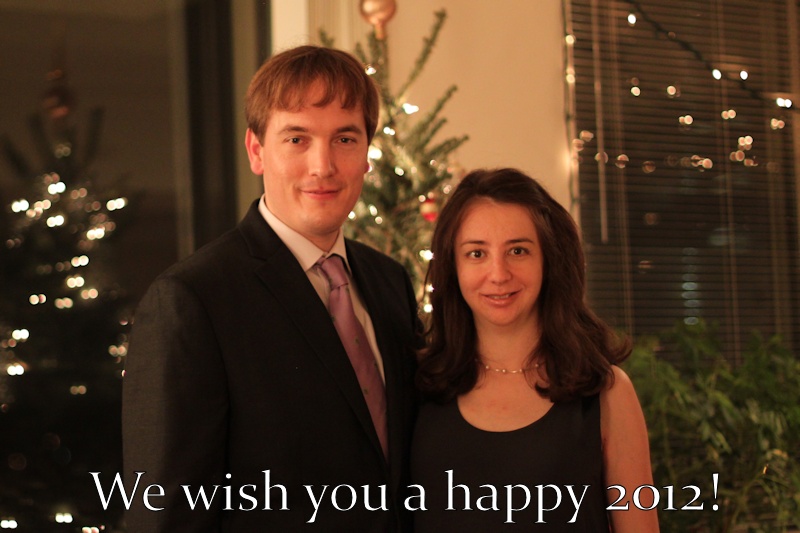
We wish you and yours a happy 2012!

Happy 2012!

Best regards,
Sasha & Guus

By Guus , 15 December 2011

ludicrously or whimsically comical; clownish.

By Guus , 14 December 2011

Famous street in Beverley Hills, CA with high end fashion shopping.

By Guus , 14 December 2011

I borrowed this book from the Arlington Library; a well-worn copy from 1997. The original edition is from 1969, and while I didn't realize it when I picked it up from the shelves, it is a well-known Christmas book that has even had exhibition in the Smithsonian around it. I enjoyed reading this book during the holidays, although it was not as interesting as the book on Thanksgiving I read in 2008.

The book explores the different traditions that immigrant groups have brought to America for Christmas. The Dutch Sinterklaas for the Santa Claus character (helped by a good dose of American creativity), the German "tannenbaum" tradition, eating turkey from the America's.

As a Dutch-American it was nice to read about the introduction of St. Nicholas to New York by Dutch settlers in the late 1600's, and how St. Nicholas merged with other figures into our current Santa Claus.

The book also contains a large amount of recipes. For me, the main text was more interesting. If anything, the recipes show that in all cultures winter celebrations are accompanied by copious amounts of found, often high in sugar and fat... and delicious.

It is striking to read how many different traditions and rituals exist. The culmination of this mixing bowl is the Christmas celebration in Hawaii.

For me personally, building rituals around the holidays and events is important -- preserving great memories from my childhood and mixing them with Bulgarian and American traditions. The book shows that this is the way it always goes: mixing and combining traditions have led to what we now consider "standard American Christmas" -- the same of course goes for other celebrations like Thanksgiving and birthdays etc. It's a strangely comforting feeling.

By Guus , 4 December 2011

This is one of the best books I've read in years, and certainly one of the most hopeful books.

Steven Pinkert convincingly makes the case that violence today, in all its forms, is at an historical low and has been on the decline throughout human history. Ranging from big stuff such as murder and torture, to smaller forms of violence as depicted in advertising in the 1950s, violence is clearly on the decline. This has huge implications for society and politics.

"The decline of violence may be the most significant and least appreciated development in the history of our species. The implications touch the core of our beliefs and values -- for what could be more fundamental than an understand of whether the human condition, over the course of its history, has gotten steadily better, steadily worse, or has not changed?"

The book's message resonates greatly with me: life nowadays is better than ever, and modernity is a force for the good, fueled by the ascent of reason. This is a very hopeful book.

The first part of the book, describing historical trends, is stronger than the second part where the author goes into detail on how the human minds works. A minor point of criticism is that some of his statements about more recent history, indicating that the US is becoming more liberal, seem a little premature, even though the long-term trend is probably correct.

I bought this book at the airport in San Francisco, traveling back from work.